OT Facts: History, Innovation, and Purpose
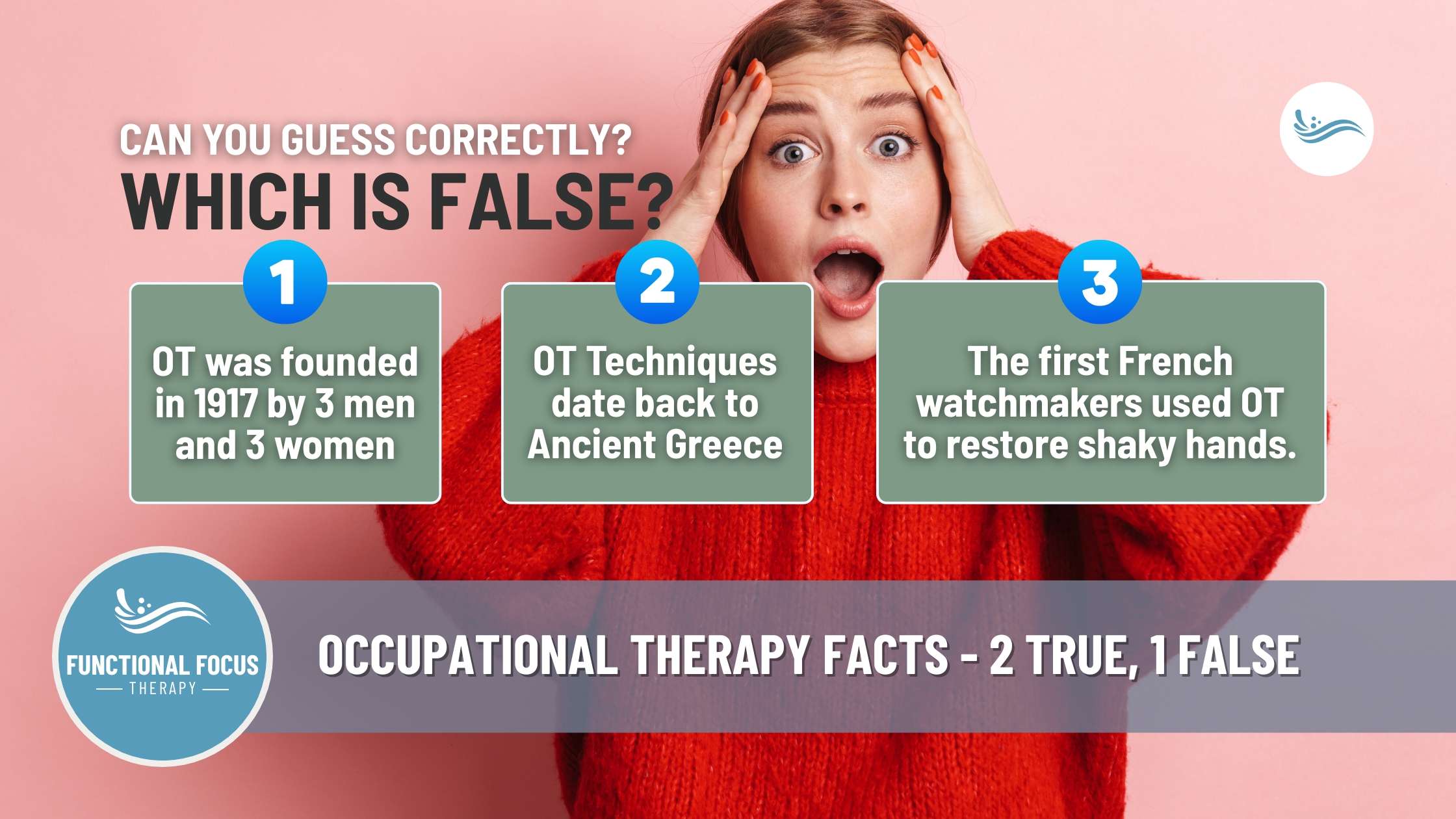
Occupational Therapy is a profession built on a rich tapestry of history, innovation, and purpose. From ancient healing practices to modern-day rehabilitation, OT has evolved into a vital part of healthcare – helping individuals of all ages engage in the activities that give their lives meaning. At Functional Focus Therapy, we believe that understanding the roots of OT not only deepens appreciation for the field but also highlights its enduring relevance. In this post, we’ll explore two fascinating truths – and one clever myth – about Occupational Therapy that might surprise you.
FACT #1:
Occupational Therapy Was Founded in 1917 by 3 Men and 3 Women
Occupational Therapy (OT) as a formal profession was established in 1917 during a pivotal meeting held in Clifton Springs, New York. This gathering led to the creation of the National Society for the Promotion of Occupational Therapy, which would later become the American Occupational Therapy Association (AOTA). What makes this founding moment particularly remarkable is the gender balance among its six founders – three men and three women – at a time when women were still fighting for the right to vote in many countries.
The founding members included George Edward Barton, Dr. William Rush Dunton Jr., Eleanor Clarke Slagle, Susan Cox Johnson, Thomas B. Kidner, and Isabel Gladwin Newton. Their shared vision was to promote health and well-being through purposeful activity, especially in response to the needs of soldiers returning from World War I. They believed that engaging in meaningful occupations—whether physical, creative, or social – could restore function, dignity, and independence.
This foundational principle continues to guide OT practice today. Functional Focus Therapy upholds this legacy by helping clients engage in the activities that matter most to them – whether it’s returning to work, managing daily routines, or participating in community life.
FACT #2:
OT Techniques Date Back to Ancient Greece
While Occupational Therapy was formally established in the early 20th century, the principles behind it have ancient roots. Historical records suggest that as early as 100 BCE, Greek physicians recognized the therapeutic value of engaging patients in meaningful activities. Philosophers like Asclepiades and Galen advocated for the use of exercise, music, and occupation as part of holistic treatment for mental and physical ailments.
These early techniques emphasized the connection between body, mind, and environment—an approach that closely mirrors modern OT philosophy. Activities were tailored to the individual’s needs and were used to promote healing, reduce stress, and restore function. The idea that purposeful engagement could lead to better health outcomes was revolutionary then—and remains central to OT today.
At Functional Focus Therapy, we draw inspiration from these time-tested principles. Whether we’re helping a child develop fine motor skills or supporting an adult recovering from injury, our interventions are rooted in the belief that meaningful activity is a powerful tool for healing and growth.
FACT #3:
French Watchmakers Used OT to Restore Shaky Hands
This one might sound plausible – but it’s entirely fictional. There is no historical evidence that French watchmakers in the 1800s were trained in Occupational Therapy techniques to restore hand dexterity. While precision work like watchmaking certainly requires steady hands and fine motor control, OT as a profession did not exist at that time, and there were no formal therapeutic interventions designed for artisans in this way.
The myth likely stems from the idea that OT is closely associated with hand therapy and fine motor rehabilitation – which is true today. Occupational therapists often work with individuals experiencing tremors, weakness, or coordination issues, using targeted exercises and adaptive strategies to improve function. However, attributing this to 19th-century watchmakers is a creative stretch.
At Functional Focus Therapy, we do work with clients experiencing hand-related challenges, including tremors, arthritis, and post-surgical recovery. Our experienced therapists use evidence-based techniques to help individuals regain control, confidence, and independence in their daily tasks. But rest assured—no antique watches are involved in the process.